Things You Didnt Know About Chucky

10 things y'all didn't know virtually Hachiko, Japan'south most loyal domestic dog
He'south been famous in Tokyo since 1932, but the city'due south obsession with Hachiko goes style across the Shibuya Station statue
You undoubtedly know about the Hachiko statue, Shibuya's de facto meeting spot. And you lot probably know a niggling bit about how the pup waited patiently at Shibuya Station every day for his owner to come up home from work, even subsequently his primary passed away. The story continues to inspire Japan to such an extent that another statue was erected in 2015 at The Academy of Tokyo's campus, causing the land to shed fifty-fifty more tears over the bittersweet tale. Since we tin can't help getting swept up in the emotion, nosotros decided to create our own ode to Hachi with a list of niggling-known facts about man's all-time friend ever.
1. He has some deep country roots
In contrast to him being a symbol of Tokyo's most stylish 'hood, Hachiko was non originally from Shibuya, or even Tokyo for that affair. He was built-in in Odate Urban center in Akita Prefecture on Nov x 1923 to father Oshinai (named after the area they lived in) and female parent Goma (which means 'sesame'). The newborn pup was sold for ¥xxx (a sizeable sum at the time) to Hidesaburo Ueno, an agricultural scientist at the University of Tokyo who was looking for a pure-bred Akita-inu ('Akita domestic dog'). He was put on an limited train and arrived in Tokyo 20 hours later. Ueno named the pup Hachi after the number eight, which is considered lucky in Japanese – the 'ko' was added afterwards.
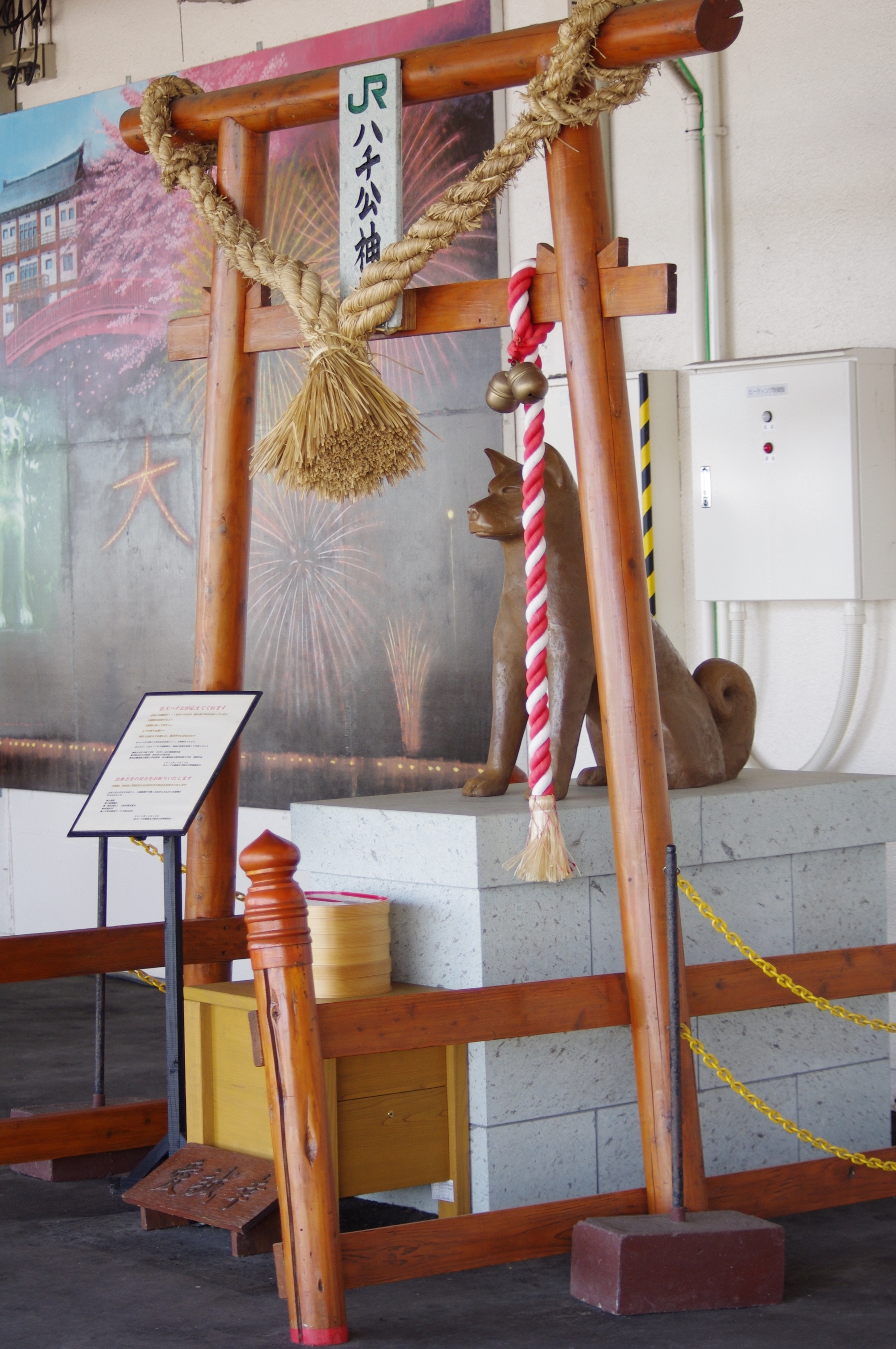
Odate City is fiercely proud of being Hachiko's (and the Akita breed'due south) furusato (hometown), and loves to prove it. Not only is there a Hachiko statue in front of Odate Station (above), you can find a Hachiko Shrine on the platform and many more Akita-inu statues in the area, like on acme of the postbox at the Metropolis Hall (run into below). They've besides decorated the metropolis's manhole covers with Hachiko-related cartoon characters. And there's a small museum, Akitainu Hozonkai, that'll teach y'all all you e'er wanted to know nearly Akita-inu.
2. He was bullied
Afterward Ueno'due south death in 1925, Hachi was given abroad and forced to hop between several homes miles away from Shibuya, but he kept running dorsum to the now-famous spot where he used to meet his owner every day. Eventually, he settled at the abode of Kikuzaburo Kobayashi, Ueno's former gardener.
Kobayashi's house was in Tomigaya (close to Ueno's previous home and within walking distance of Shibuya), so the pup could hands brand his daily walk to the station. He continued to practice this for about 10 years, patiently waiting for Ueno to come dwelling house. Sadly, there are several stories about how Hachi was beaten and bullied by pedestrians and fifty-fifty children while he lingered effectually the station.

3. His story went viral in 1932
When Hirokichi Saito, the chairman of the Nihon Ken Hozonkai (The Clan for the Preservation of the Japanese Dog) found out virtually Hachi and his story, Saito published an commodity in Asahi Shimbun paper virtually how the poor pup was being mistreated. The story naturally tugged at readers' heartstrings and Hachi rapidly became a public icon. The 'ko' was added to the finish of Hachi's proper name effectually this time to show respect for his devotion and loyalty, and he gradually became known equally Hachiko.

iv. He attended the unveiling of his own statue
It's unusual for an honorific statue to be congenital while the person – or in this case, dog – in question is still alive, but Hachiko actually fabricated an appearance at the opening of his statue in 1934. Rumour has it that earlier the unveiling many scammers tried to make money by claiming they were the ones creating the statue. The real sculptor, Teru Ando, who was an associate of Saito, hurried to stop his masterpiece before things got out of hand.
5. During World War 2, his statue was melted for train parts
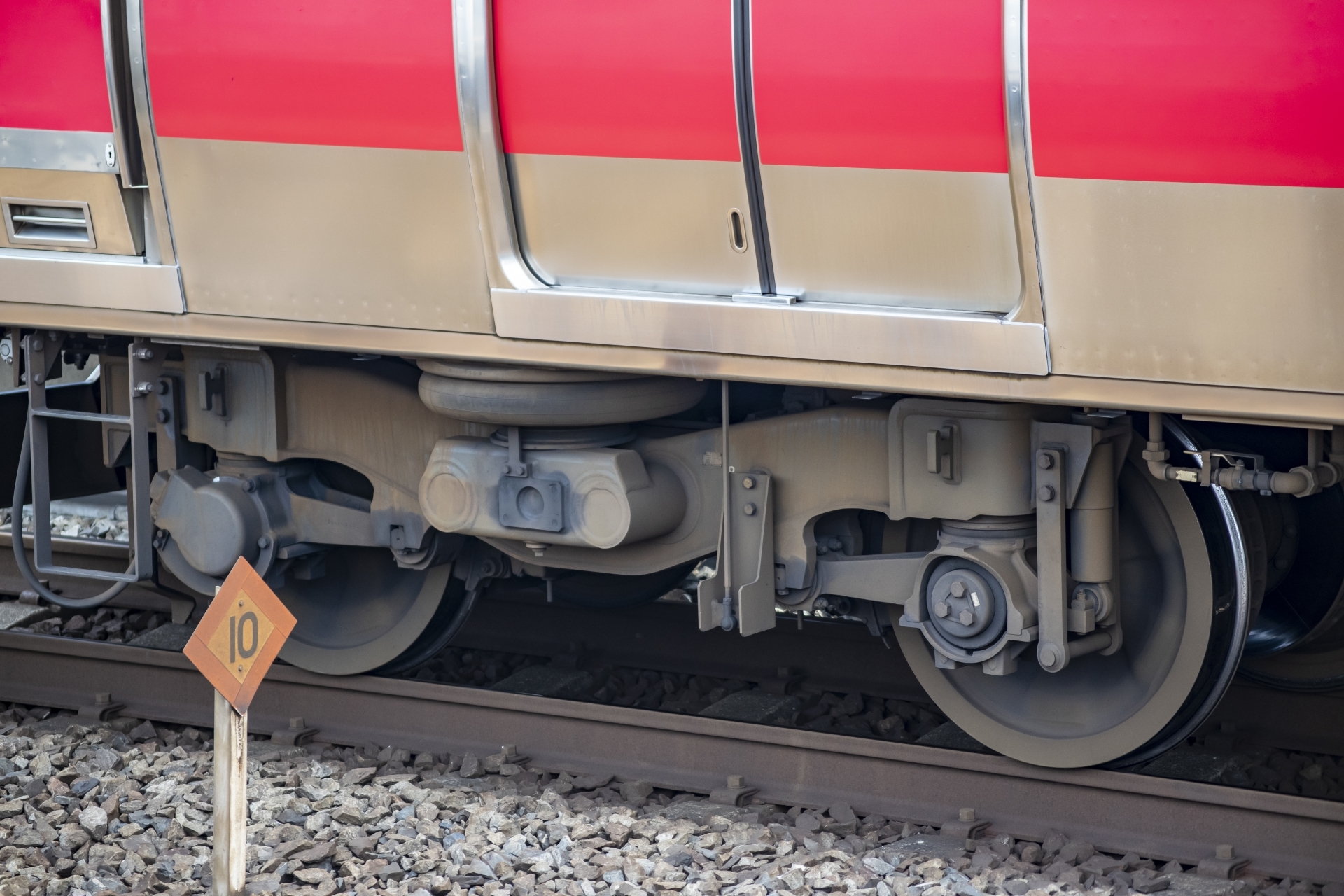
Not fifty-fifty Hachiko's statue managed to get an exemption for its metal during the Pacific War. To add together insult to injury, the original statue was melted just ane solar day before the war ended. Some say that the metallic was used to produce parts for a locomotive for what is at present the Tokaido line. After the war, Ando's son Takeshi built a new statue, which is the ane you come across in Shibuya today. The statue at Odate Station was too melted during the war, with the current statue dating from 1967.

6. Hachiko and Ueno were reunited more than 90 years later
Eighty years later on the canine'south death, The University of Tokyo initiated a projection to build a memorial statue to reunite Hachiko and his possessor. More than than ¥10 million in donations was raised from individuals and companies in order to realise the fictional reunion. Y'all tin can find information technology on The University of Tokyo's campus, just side by side to Ueno Park.
seven. You can still pay your respects
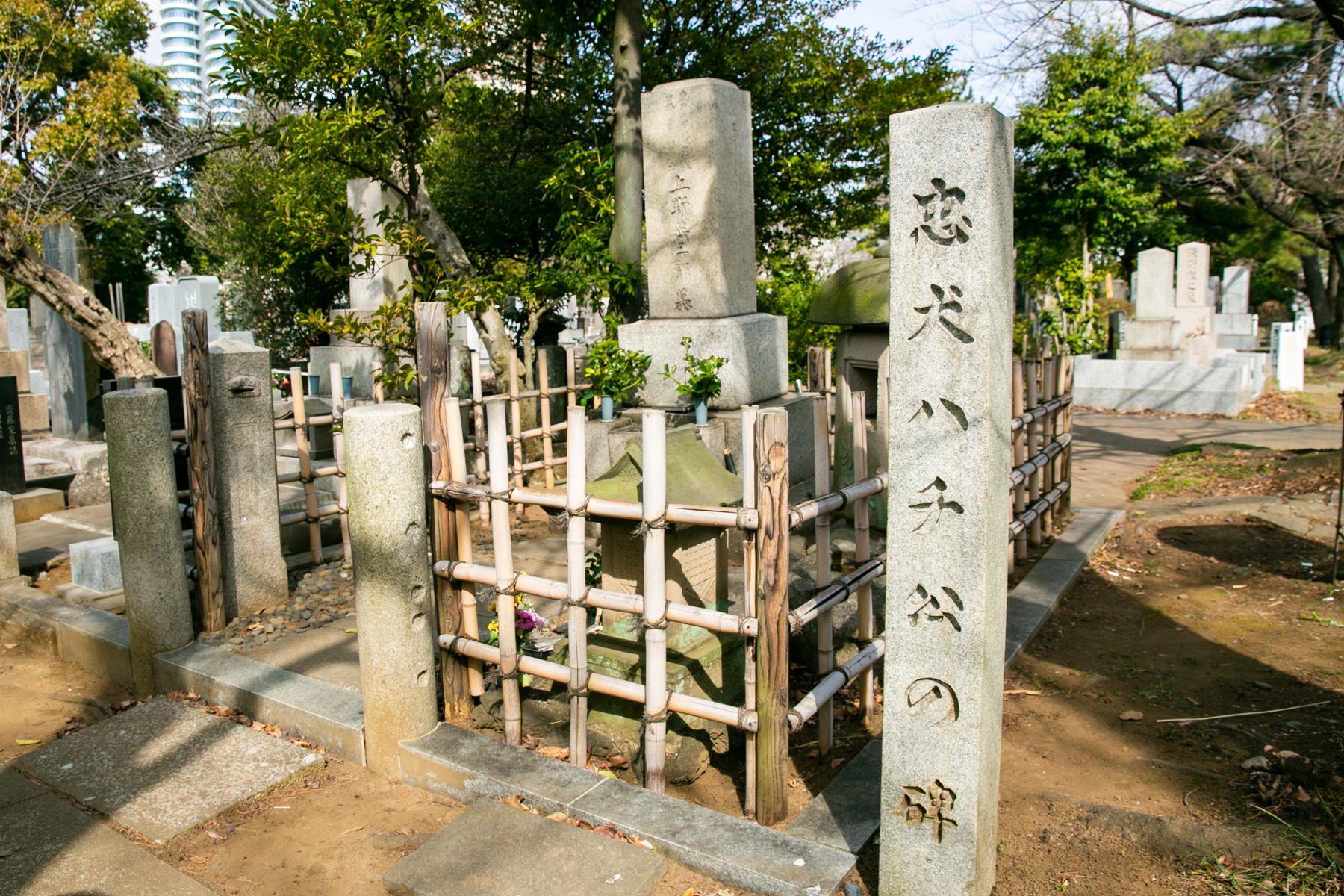
At Aoyama Cemetery, a monument was placed beside Ueno'south tomb shortly after Hachiko died in 1935. The cemetery is actually more similar a park and covers an extensive area near Gaienmae and Aoyama Itchome stations. Other reasons to visit include the magnificent cherry blossom viewing during spring, the architecture of the tombstones, and the history – plenty of famous figures have been buried here since the cemetery was built in 1872.

8. Yous tin view his organs and his stuffed trunk. Yes, really!
The initial dissection written report stated that Hachiko's internal organs were infested with parasitical disease. He obviously also had a few yakitori (chicken) skewers in his tum. His organs were stored in specimen bottles and a re-exam in 2010 ended that Hachiko actually died of cancer. In case you lot're smashing to exercise a little visual examination of your own, you tin can view his organs at the annal museum of The University of Tokyo's Faculty of Agronomics, just near Ueno Park. If you prefer something slightly less gruesome but still a piffling bizarre, you tin can see a taxidermied Hachiko – displayed as 'Akita-inu (Hachi)' and featuring his original fur – at the National Museum of Nature and Scientific discipline.

9. He has a mate in Statueland
While at Ueno Park, you might too want to visit the statue of samurai Saigo Takamori and his pup Tsun. Thanks to their condition, Hachiko and Tsun have been paired off every bit symbolic protectors of Tokyo and Japanese economy. Kind of like the pairs of komainu ('lion-dogs') placed equally guardians at the entrance to shrines. If you want to get all romantic about it (of course you do), it's been said that the female Tsun is the perfect yin to Hachiko's yang.

x. Hollywood made him American, but at that place'southward a better moving picture
In 2009, the film Hachi: A Dog'southward Tale starring Richard Gere brought the story to the masses around the world. Although it'due south suitably heartrending, the motion-picture show was set in the Us which detracts from its cultural significance. You're meliorate off watching the original 1987 picture show, Hachiko Monogatari, to get a more than authentic experience for Hachiko'southward life and times.
Source: https://www.timeout.com/tokyo/news/10-things-you-didnt-know-about-hachiko-japans-most-loyal-dog-030821
0 Response to "Things You Didnt Know About Chucky"
Post a Comment