Commentary: Here’s what zero tolerance towards sexual misconduct looks like
SINGAPORE: Sometimes, it just takes i brave adult female to speak up to make the earth fairer and safer for all.
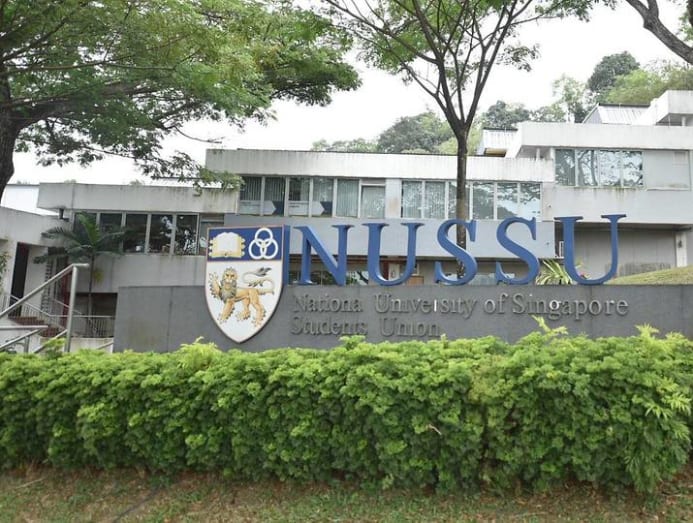
Monica Baey did that when she spoke up concluding calendar week nigh her experience later a fellow National Academy of Singapore (NUS) student was caught filming her in the shower.
ADEQUACY OF PUNISHMENT
Understandably, most of the focus has been on the adequacy of the punishment. The police issued a statement on Tuesday (Apr 23) to explicate the factors they considered when deciding on his punishment of a 12-month conditional warning - such as age, potential for rehabilitation and re-offence, remorsefulness, and the absence of any other obscene materials on his devices.
Student prophylactic has been a recurrent theme in the word surrounding this example.
But Ms Baey's case surfaces another equally important event: The responsibility of educational institutions to enforce a zero-tolerance attitude to sexual harassment and attack on campus.
TOLERANCE TO SEXUAL MISCONDUCT IN NUS
When such incidents happen, students rightfully expect their institutions to do the right matter, which includes providing the necessary support, taking prompt steps to investigate and, where the accused is found guilty, meting out appropriate sanctions.
If this is not done, the complainant may feel dangerous or worse, re-victimised by the system.
For NUS, information technology is not clear exactly how information technology went nearly investigations in this case, and what it did to try to support Ms Baey.

Information technology appears that the academy felt that it could accept washed ameliorate, in which instance it responded well: Announcing that it would embark a review of its processes, and calling a townhall meeting to discuss the matter with its student torso, amidst other measures.
Equally for the sanctions imposed, suspension and expulsion are non the but options NUS has recourse to.
Education institutions in the US have an array of other options, such equally probation, transcript notations, no-contact conditions, compulsory grooming, mental health assessments, mandatory rehabilitative counselling (similar to what is offered under our family unit violence government) and other ways of restorative justice.
READ: University campuses must be safe places for all, a commentary
Managing sexual harassment incidents is never like shooting fish in a barrel, especially when the establishment is as big and de-centralised every bit NUS. What is a fair outcome? I would argue much of it concerns the process of how such incidents are managed.
3 LESSONS
Aware, through its consultancy arm, Catalyse Consulting, has supported many Institutes of Higher Learning (IHLs) in their efforts to constitute and better internal systems of reporting, investigation and discipline to prevent and manage harassment. We have also trained their staff to implement each of these processes professionally.
We have gained three key lessons from our x years of piece of work in this area.
1. Prevention is the best cure
One instance is i too many. Every case is a crisis to be managed. Many things can go wrong, especially if personnel managing the case are inexperienced.
At the terminate of the day, whatsoever the outcome, people will exist hurt in the process, and in that location will usually be some dissatisfied parties. In an age of social media, the stakes are fifty-fifty college, and things can spiral out of command.
So IHLs should do whatever they tin to prevent and deter such incidents. This includes:
- Instilling confidence in the system: Policies must provide for no-retaliation and all complaints must be professionally investigated. Wrongdoers must be held accountable and in that location should be no attempts to "hush up" whatever wrongdoing;
- Having clear, written policies accessible to all;
- Running anti-harassment public education campaigns;
- Providing anti-harassment preparation for all students starting from orientation.
The good news is that many students care about this issue, as tin exist seen from the public response to the incident. They can and should be engaged to build a culture of respect in the IHL. This will become a long way to reduce incidents.
2. Adept policies and protocols are your friends
When a case occurs, everyone is in crunch way. The IHL will be under a lot of pressure from different parties.
This pressure can be greatly relieved by having clear policies and protocols in place. That way, parties involved know what to expect, and the staff managing the grievance are more than probable to do the correct thing.
The starting point always has to exist a presumption of innocence until proven guilty. And the process must be one that takes into account all parties' perspectives.
Protocols must have timelines and the people managing the process must ensure that they act rapidly and within the timelines.
In most cases, the eventual effect will non satisfy everyone. But if there is a clear and transparent process that appears fair, people will notice results easier to accept.

I once worked with a survivor who was unhappy with the outcome of her example, every bit the investigation had not turned upwardly sufficient evidence.
Notwithstanding, this survivor felt that her example had been fairly and appropriately handled: Information technology was investigated by a third-party (lawyers who had counselling training and specialised in cases similar hers), who asked questions in a professional and empathetic manner, and explained the side by side steps to all involved with clarity and expediency.
So, while she wished in that location had been a different outcome, the survivor was able to come to terms with it.
iii. Managing harassment is circuitous. Training is critical.
Having policies and protocols in place is just the beginning.
Near harassment cases are complicated. Evidence and consent are often an issue. Investigations may involve multiple parties and may exist a lot more protracted.
The situation may go emotionally charged with parties involved anxious about their safety and repercussions. It is not uncommon for parties to experience trauma, depression or social ostracisation.
Ensuring parties' well-being is critical. Counsellors should be at manus to provide support.
Those interacting with the complainant and offender must be mature, sensitive and empathetic. They should besides be properly trained to understand the nuances of human ability dynamics and sexual harassment, and must come beyond every bit fair, apparent, knowledgeable and professional.
Managing harassment incidents is not piece of cake. So, it is all-time to centralise the management of such cases to a squad that has received the necessary preparation and is experienced in dealing with such cases.
The trauma wrought on survivors by sexual harassment still oft goes unacknowledged. We oft talk of criminal records - or even merely accusations - "ruining the lives" of perpetrators, without speaking in the same jiff of the lasting psychological and emotional wounds borne past their victims - especially in the absence of some measure of justice.
I met a adult female once who had been harassed by a lecturer when she was a university student. The lecturer received no material punishment and was allowed to continue working at the schoolhouse.
A decade afterwards that event, the woman remained haunted - not only by her ain harassment, just by the potential harassment she worried other students afterwards her might accept suffered nether his charge. She was even taking steps on her ain to try to find other possible victims.
My signal is: By not taking harassment seriously, and non doling out commensurate action when it occurs, we are robbing survivors of the closure they so desperately demand to heal.
Combating sexual harassment and fostering a culture of safety, respect and accountability in campuses require leadership, commitment and time.
I urge all IHLs to intensify their efforts to ensure campuses are safe, respectful and equipped to adequately support survivors and hold offenders answerable.
Corinna Lim is Executive Director of Aware and provides consultancy to organisations to create inclusive and safe workplaces.
0 Response to "Commentary: Here’s what zero tolerance towards sexual misconduct looks like"
Post a Comment